
In this guide
- A telephone enquiry with a defined purpose
- Find the question beneath the wish to book
- Make a note that is small enough to use
- Decide whether you can speak freely
- Understand the distinction between the possible stages
- Ask what the appointment includes
- Treat the meeting format as part of the assessment
- Prepare for a conversation about children
- Prepare for a conversation about money
- Know what can be decided about another participant
- Bring practical constraints into the decision
- Give yourself permission to ask twice
- Leave with a clear account of the next action
- Consider what happens around an online appointment
- Separate an urgent problem from a long-term question
- Review the commitment before saying yes
- Consultation questions with practical answers
01 / Book Consultation
A telephone enquiry with a defined purpose
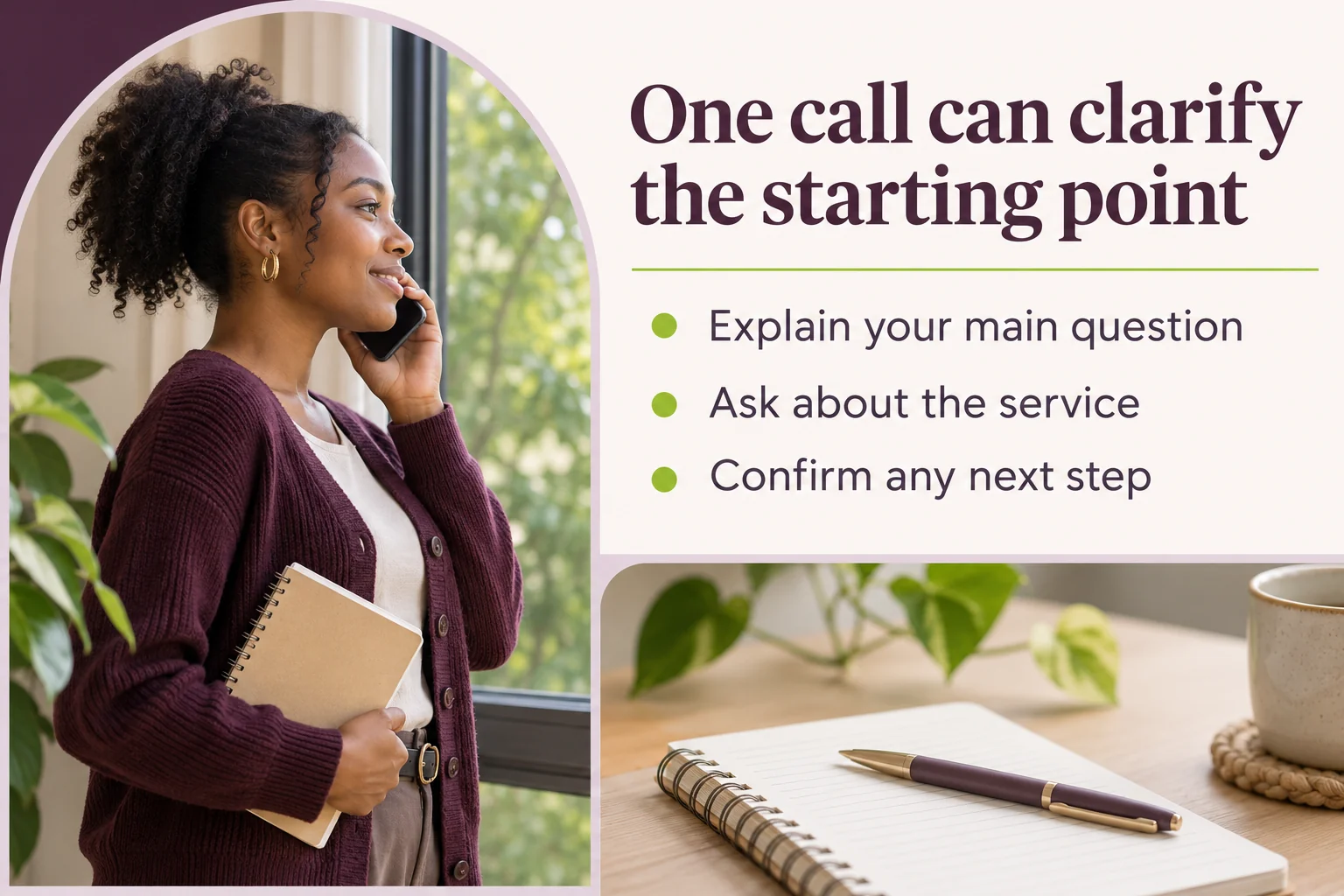
To enquire about a consultation, call 0330 010 0028. This page helps you prepare for that conversation and understand the decisions that may follow it. The call is an enquiry about the service. It is not an online reservation, a payment instruction or confirmation that a particular appointment has been accepted. Any meeting requires the relevant details to be discussed and agreed directly.
- Prepare a short note. Identify the broad topic and the practical question you want answered.
- Call 0330 010 0028. Explain what you would like the conversation to clarify.
- Ask what is proposed. Clarify the appointment’s purpose, format, charge and conditions.
- Identify the next action. Establish what follows and who is responsible for it.
- Confirm any appointment. Make sure you understand how it will be confirmed before relying on it.
You might want to understand whether your question belongs in mediation, find out what an initial assessment involves or ask about practical arrangements. These are reasonable purposes for an enquiry even if you have not decided whether to take part. You do not need to present a finished plan or explain every event in a relationship before asking how the process works.
If you have a deadline, a concern about speaking privately or a communication requirement, bring that into the discussion early. Those circumstances can affect what you need from the conversation. Calling does not suspend legal deadlines or provide emergency protection. Where a time limit or immediate risk is involved, obtain suitable help independently rather than assume that an enquiry will resolve it.
02 / Book Consultation
Find the question beneath the wish to book
Before making a call, it can help to finish the sentence: I would like this conversation to clarify. Your answer may concern children, financial discussions, a first assessment or whether a particular format can be considered. The question gives the enquiry a direction without requiring you to predict the outcome. It also helps distinguish an information request from an appointment you are ready to arrange.
You may have several concerns. List them briefly, then identify the one that determines what you need next. For example, a question about online participation may matter because you cannot speak privately at home. Asking only whether meetings happen online would leave the more important difficulty unexplained. A short explanation of the practical need can make the answer more useful.
There is no requirement to agree with another person about the purpose of your enquiry before contacting the service. You can ask about your own understanding and options. However, your call cannot commit someone else to attend, authorise sharing their private information or settle whether a joint process will be suitable. Those are separate questions that require appropriate assessment and arrangements.
03 / Book Consultation
Make a note that is small enough to use
A useful preparation note can fit on a single page. It might identify the broad topic, the practical question you want answered and any circumstance that affects how you can participate. Keeping the note brief makes it easier to refer to while listening. It also reduces the pressure to turn an initial enquiry into a complete account of events.
Use factual descriptions where possible. Instead of summarising a long history of arguments, note the arrangement you are struggling to discuss. You might write that a school-week routine needs attention or that you need to understand how financial information is gathered. If you do not know an answer, leave the uncertainty visible. Guessing dates, figures or the other person's intentions can make the conversation less clear.
There is usually no reason to gather a large file of private documents simply to ask about the service. Ask first what information would be necessary for the next stage and how it should be provided. Do not read out detailed account identifiers or a child's private information merely because you have it to hand. Preparation should support the enquiry rather than increase the amount of sensitive information shared without a clear purpose.
04 / Book Consultation
Decide whether you can speak freely
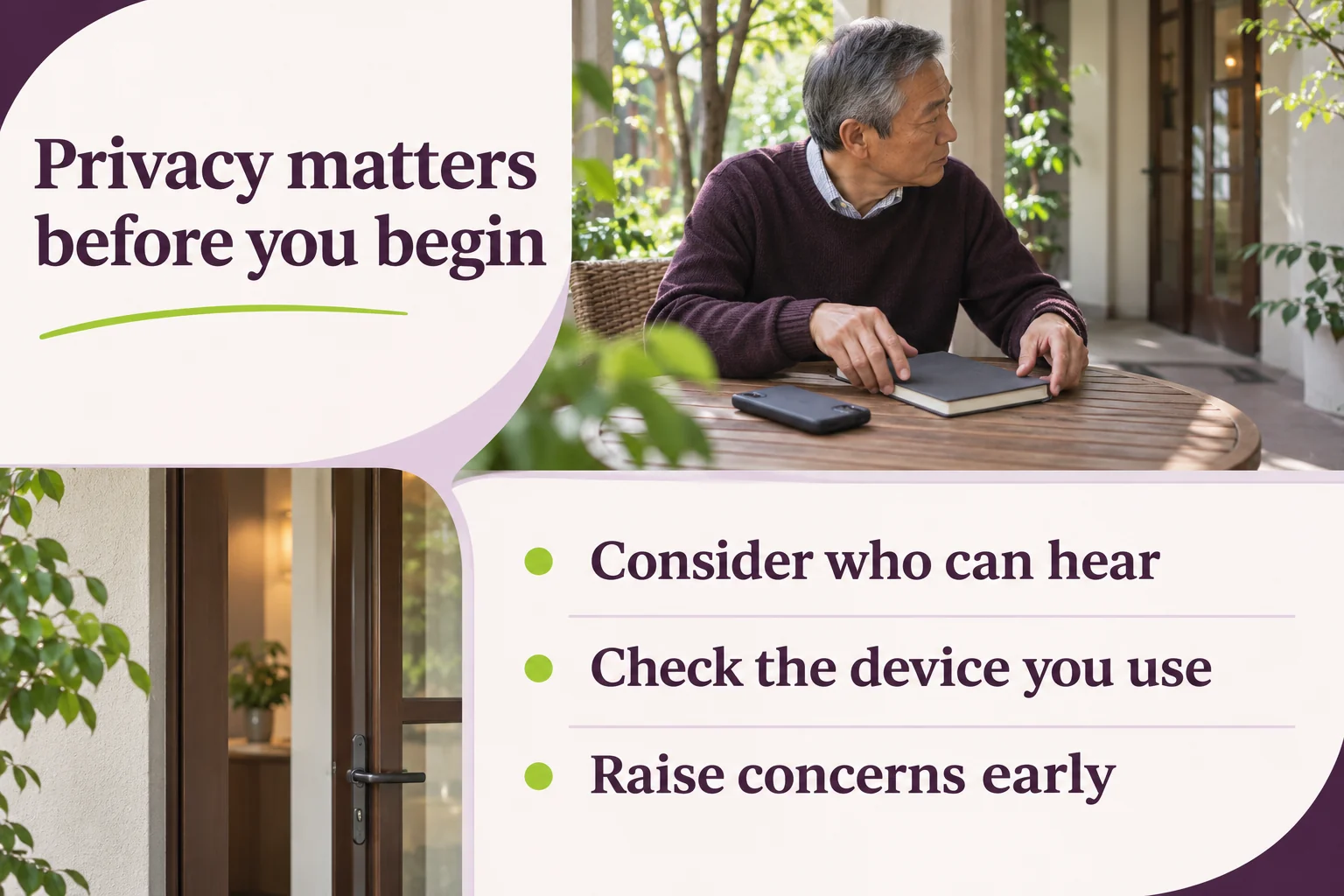
Think about where you will be when you make the call. Consider:
- Who may overhear
- Whether the device is shared
- Whether a visible call record could matter in your circumstances
This is especially relevant if you feel monitored or under pressure. A routine suggestion to choose a quiet room may be insufficient when privacy itself is difficult to arrange.
You can begin by saying that you need to ask a private suitability question before discussing a joint meeting. You do not have to give a full account while someone else is present. Ask what can be discussed safely and what communication arrangements would need agreement. Do not assume that a callback, message or use of another person's contact details will be appropriate without explaining your concern.
If the conversation stops being private, it is reasonable to say that you cannot continue. A telephone enquiry should not be treated as a reason to remain in an unsafe discussion. Mediation is not a crisis response or a replacement for protection and legal assistance. A format such as shuttle or online mediation may change the setting, but it cannot by itself establish that participation is safe or suitable.
05 / Book Consultation
Understand the distinction between the possible stages
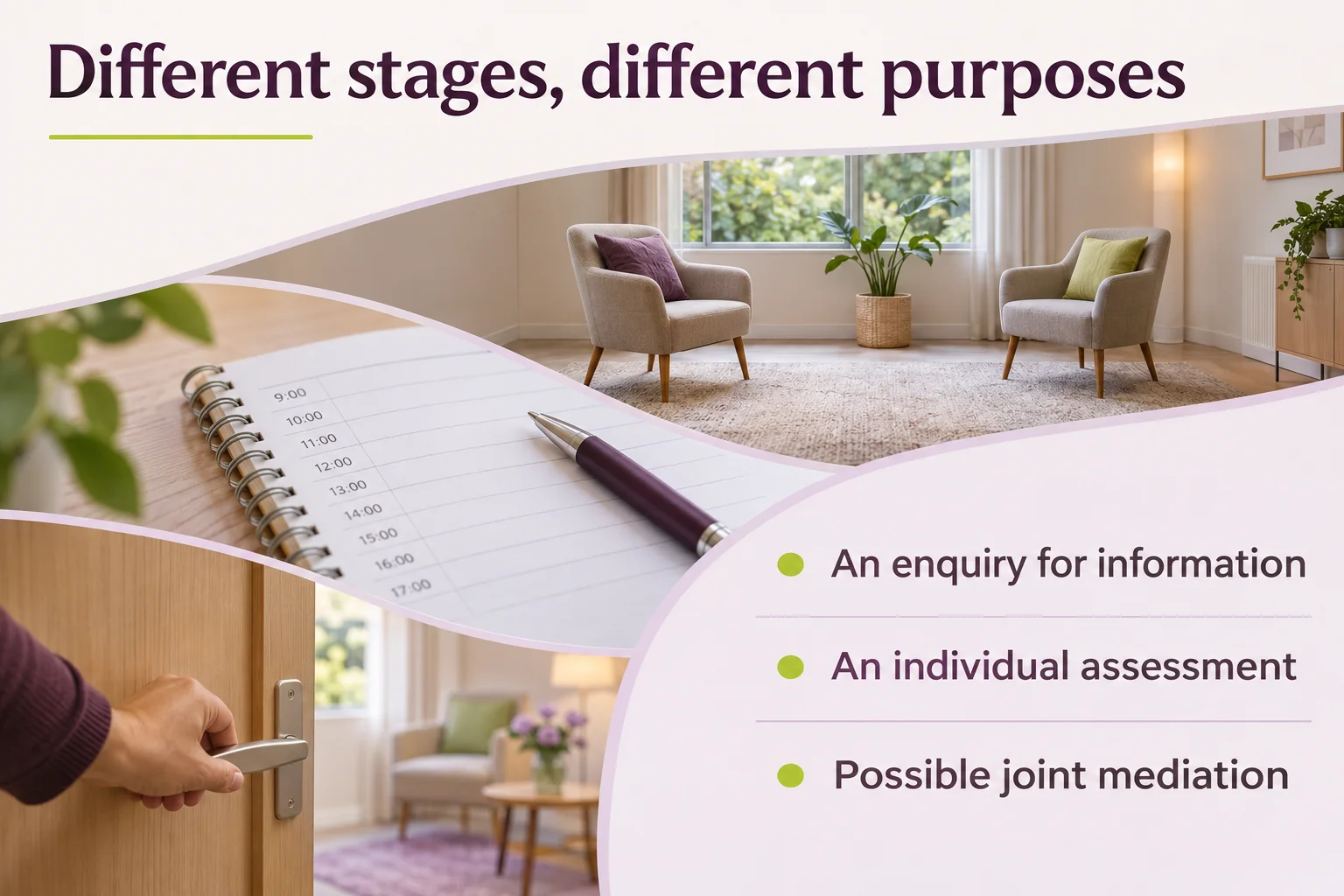
| Stage | What it involves |
|---|---|
| Enquiry | Provides information about the service and may establish what should happen next |
| Mediation Information and Assessment Meeting (MIAM) | A distinct step concerned with information and assessment |
| Joint mediation | Discussion between participants through an agreed process |
These descriptions should not be collapsed into a single promise about what your first call will achieve.
Ask which stage is being proposed and what its purpose is. Clarify who would be involved, whether the discussion is individual or joint and what information is expected beforehand. If you need documentation connected with a court application, explain that specifically. A general enquiry should not be assumed to provide a certificate, meet a procedural requirement or determine whether an exemption applies to your circumstances.
Rules about assessment and court applications depend on the application and the circumstances, and exceptions can apply. An appointment enquiry is not individual legal advice about those rules. If you need to know how they affect a deadline or application, obtain appropriate advice. Confirming the purpose of a meeting before arranging it can prevent you from expecting an outcome that the appointment was never intended to provide.
06 / Book Consultation
Ask what the appointment includes
A clear appointment description goes beyond its name. Ask:
- What subjects it is intended to cover
- What preparation is expected
- Whether any written material is included
Establish whether the meeting is for you individually or whether another person's involvement is needed. These details help you understand the practical and financial commitment rather than relying on a broad description such as consultation.
If there is a charge, ask for the amount, what it covers and how any further work would be agreed. Clarify whether a figure is per person, per meeting or for a particular piece of work. Do not assume that a price mentioned for one stage covers later mediation, preparation, documents or specialist advice. This website does not promise a free consultation, a fixed package or eligibility for funding.
It is sensible to request an explanation of cancellation, rescheduling and refund arrangements before committing. Consumer rights may apply and are not removed by a general description on a website. Where a proposed service has particular conditions, those should be explained before you agree. If something is unclear, asking for clarification at this point can be more useful than trying to resolve an unexpected charge afterwards.
07 / Book Consultation
Treat the meeting format as part of the assessment
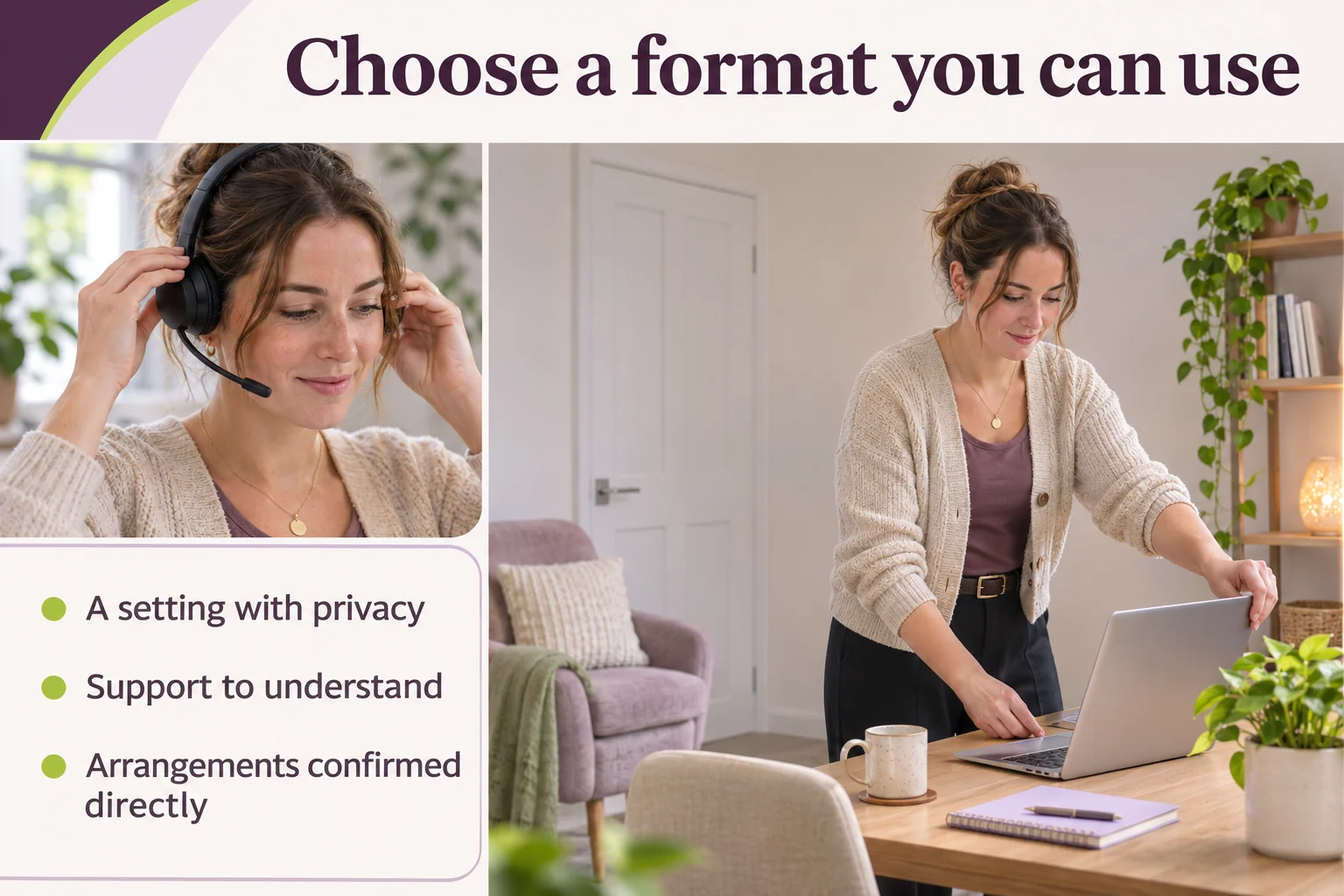
Practical format can influence how well you can participate. An online conversation may avoid travel but still require a private location, a suitable device and time without interruption. Separate conversations may reduce direct contact but introduce other questions about how communication is managed. Ask how the proposed arrangement would work for you rather than assume that its name answers these questions.
Explain any practical difficulty that matters to your participation. That may involve:
- Hearing
- Language
- Reading information
- Processing speed
- Mobility
- Technology
- The need for breaks
You can describe the assistance you need without making an initial enquiry into a detailed disclosure of medical history. The service needs to confirm what adjustments can be considered and whether the resulting arrangement is appropriate.
Ask who may be present and what rules apply to privacy, recording and supporting people. A friend who helps you prepare is not automatically entitled to attend a meeting or receive information. Likewise, another person should not be silently present during a private assessment. Understanding attendance arrangements protects the clarity of the process and allows suitability questions to be considered properly.
08 / Book Consultation
Prepare for a conversation about children
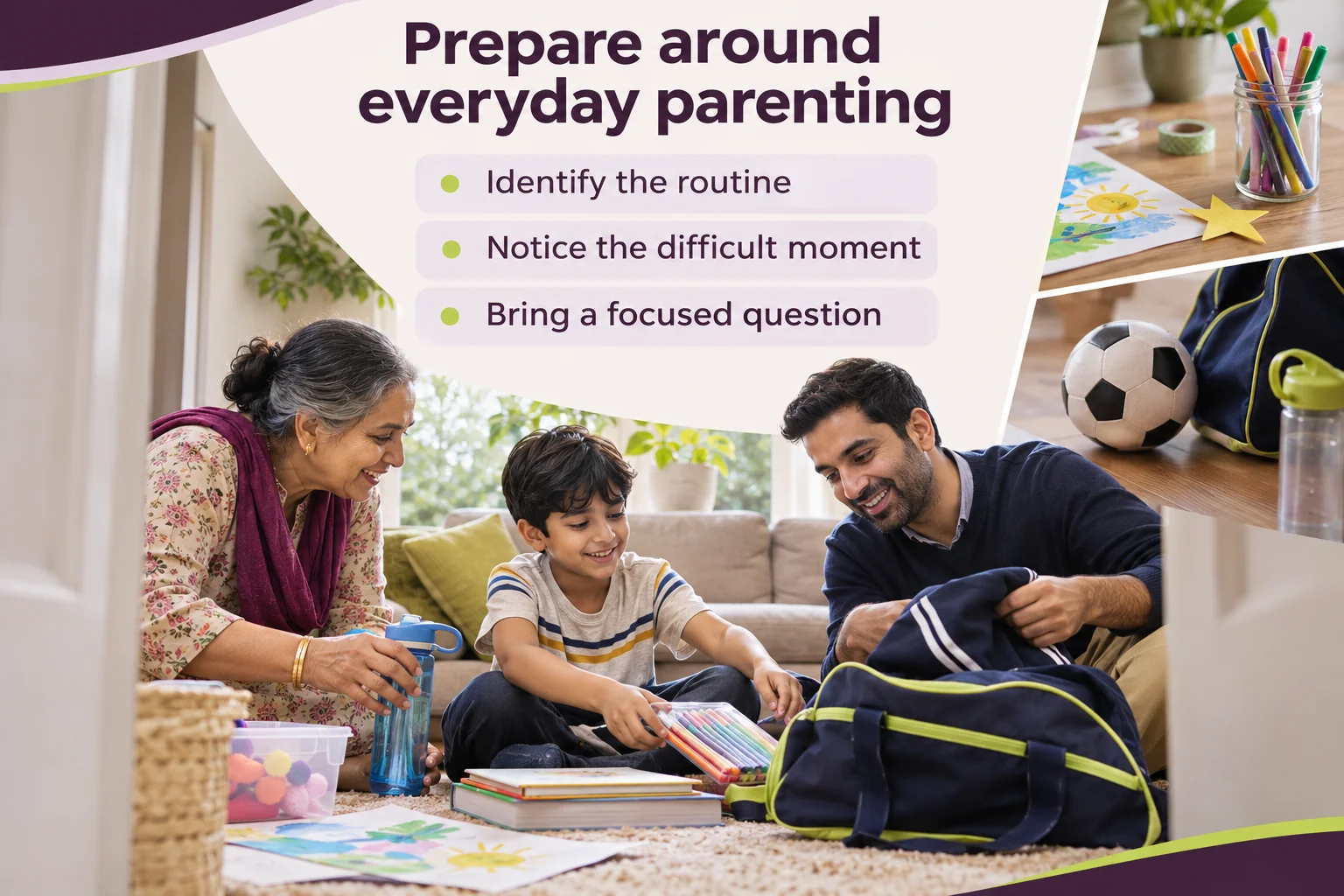
If parenting arrangements are the main topic, think about the everyday question that needs attention. A concern may relate to school mornings, handovers, holidays, information-sharing or adapting an arrangement as a child grows. An initial enquiry does not need every detail, but a clear topic helps establish whether you are asking about the right kind of service and what a later discussion might involve.
Keep the distinction between adult disagreement and a child's needs in mind. It can help to describe the practical effect of an arrangement rather than speculate about what a child would choose between adults. Do not place a child in the position of gathering information for your enquiry or carrying messages about the other person's participation. Adult responsibility remains with the adults.
You can ask how a child-focused discussion is organised and what its limits are. Do not assume that children will attend or that the service can make decisions on their behalf. If there are existing orders, safeguarding issues or legal questions about a proposed change, appropriate advice may be needed alongside any enquiry. A telephone conversation about availability or format does not vary an existing legal obligation.
09 / Book Consultation
Prepare for a conversation about money
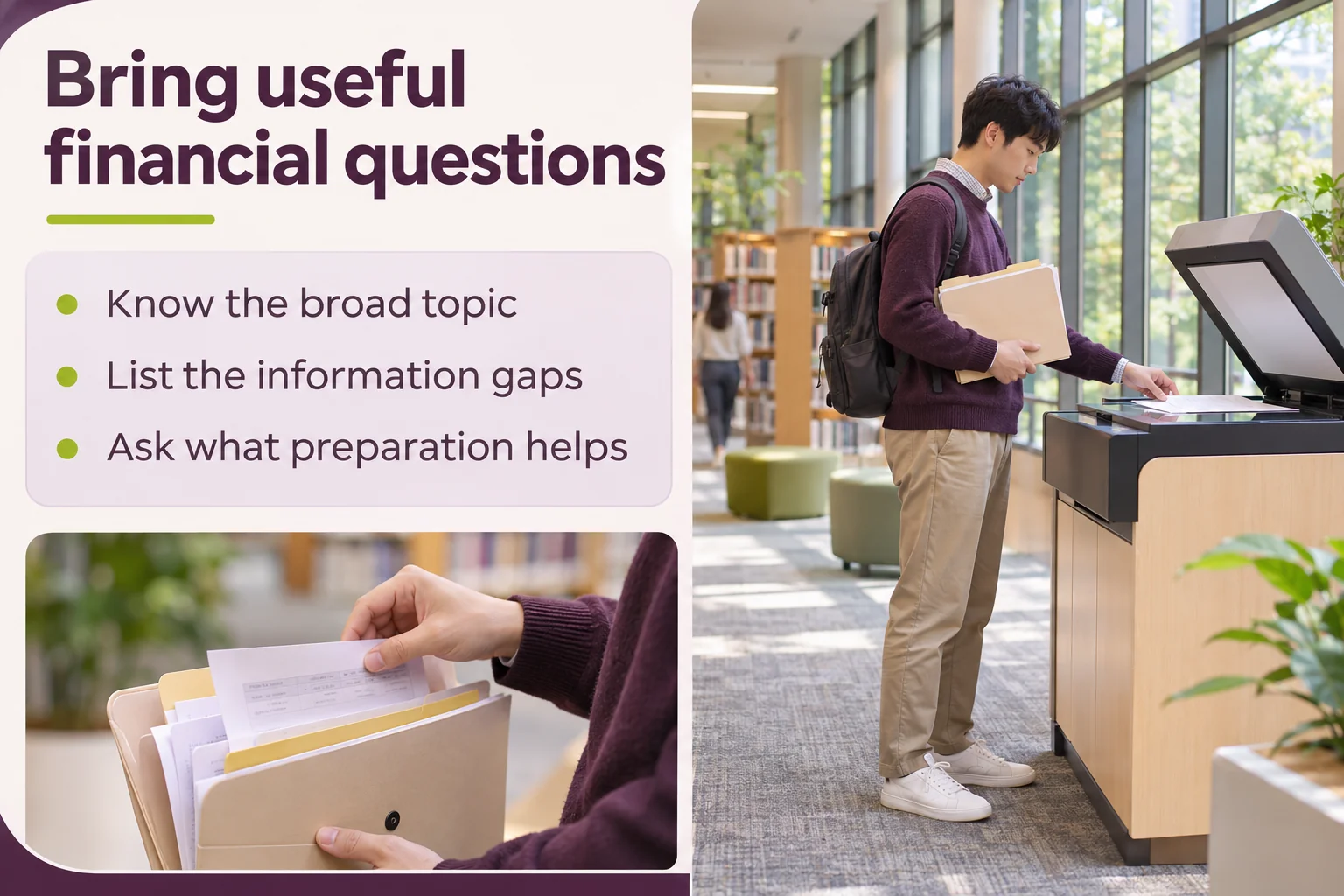
A financial enquiry can begin with the kind of question involved rather than a complete list of figures. You may need to understand how information is organised, how options are discussed or what advice might be required before deciding. Ask what preparation would be useful for a proposed appointment. Gathering the right information is more helpful than collecting a large volume of unrelated records.
Be clear about gaps. You may not yet know the value of an asset, the details of a pension or the practical cost of a future housing arrangement. The enquiry is not an invitation to invent a figure. It is an opportunity to establish whether the next stage can help identify the information needed and where specialist advice may be necessary.
Financial proposals can have legal, tax and longer-term consequences. Mediation does not replace advice about your individual position. Ask what written output, if any, a particular stage provides and what it means. A note of possible options is different from a binding financial settlement. Before acting on a proposal, understand the further advice and formal steps that may be needed to give it legal effect.
10 / Book Consultation
Know what can be decided about another participant
You can ask how another person's involvement would be considered without promising that they will agree. One person's readiness does not establish another person's willingness or suitability. If there is uncertainty, describe it accurately. A useful enquiry can still clarify how the process is explained, what permissions are required and which decisions are yours to make at this stage.
Do not provide another person's sensitive history as a way of proving your case during a booking enquiry. There may be relevant information for assessment, but its purpose and handling should be clear. If you are worried about how contact with another person might affect you, raise that concern before any assumptions are made about communication. Sharing a name is not the same as agreeing a contact plan.
If you are enquiring for a relative or friend, explain your role at the beginning. General process information can help you support them, but you cannot make their decisions or expect updates about a private enquiry simply because you placed the call. The person seeking the service may need to speak directly, and any involvement by a supporter requires clear boundaries and appropriate arrangements.
11 / Book Consultation
Bring practical constraints into the decision
An appointment affects more than the time spent in the meeting. These may all matter:
- Travel
- Childcare
- Work
- Access to a private room
- Time to consider advice
Before agreeing a date, think about these surrounding arrangements. A convenient slot is not necessarily a workable appointment if you cannot participate privately or will have no opportunity to review information beforehand.
The website does not display a live diary or guarantee a particular appointment time. Ask directly about availability and how a proposed arrangement will be confirmed. If a time is discussed tentatively, clarify whether it is being held, offered or agreed. Do not assume that reading this page or making an enquiry reserves a place.
Where your circumstances may change, ask how rescheduling works and what notice is required under the relevant service terms. You should understand any charge or consequence before agreeing to the appointment. If a legal deadline is involved, distinguish it from the service's scheduling arrangements. A conversation about a possible meeting cannot guarantee that a procedural deadline will be met.
12 / Book Consultation
Give yourself permission to ask twice
Unfamiliar terms can be difficult to absorb while thinking about a family problem. If you hear something important about charges, confidentiality, assessment or documents, ask for it to be explained in ordinary language. You can repeat back what you have understood. This is especially useful when the answer contains a condition, because the condition may change what the information means for you.
Try converting a broad answer into a specific question. If a meeting is described as an opportunity to discuss options, ask which options and whether advice about your own position is included. If a document is mentioned, ask what it records and whether it has legal effect. These questions help reveal assumptions that might otherwise remain hidden until after an appointment.
You do not have to make a decision while still uncertain about the essential details. Where you need time to think or seek advice, say so and clarify whether any offer or arrangement is time-sensitive. The purpose of an enquiry is to support an informed choice. Agreeing quickly is not a substitute for understanding what you are being asked to accept.
13 / Book Consultation
Leave with a clear account of the next action
Before ending the call, identify the action that follows and who is responsible for it. You may decide to think further, ask another question, obtain advice or arrange an assessment. If an appointment has been agreed, make sure you understand its purpose, date, format, charge and confirmation arrangements. If no appointment has been agreed, record that clearly for yourself.
A short personal note can help distinguish confirmed information from something still to be checked. Write down an unresolved question rather than relying on memory to reconstruct it later. Do not assume that a record you make for yourself is an official service confirmation or that it changes the applicable appointment terms. Clarification remains important where the meaning affects your decision.
Also consider what you should avoid doing prematurely. You may not yet have an agreed way to provide documents, permission to involve another person or advice about a financial proposal. Waiting for those points to be resolved can prevent unnecessary disclosure or misunderstanding. An enquiry can end usefully with a clearer boundary around the next step, even where you have chosen not to book anything yet.
14 / Book Consultation
Consider what happens around an online appointment
If an online meeting is proposed, ask about its practical requirements before agreeing. The relevant questions include how to join, what device is suitable and what to do if the connection fails. A successful video call with a friend does not necessarily mean that the setting provides the privacy or stability needed for a sensitive professional conversation.
Think about the room as well as the screen. Other people may enter, hear through a door or appear outside the camera's view. A headset can reduce what others hear from the device but cannot prevent them hearing your own voice. Explain any difficulty that affects your ability to speak freely. Do not assume that turning off a camera resolves a concern about monitoring or pressure.
Clarify how any documents would be considered and whether you need an opportunity to read them in advance. It can be difficult to make sense of unfamiliar financial information while watching a small screen. If reading, hearing or technology creates a barrier, describe the practical issue and ask what can be considered. The appropriate arrangement depends on the appointment and the assessment.
Also allow time immediately before and after a proposed meeting where possible. Starting while dealing with another responsibility may make it harder to understand important information. The service cannot promise a particular format through this page, but you can use the enquiry to establish what an appointment would require and whether those requirements are manageable in your circumstances.
15 / Book Consultation
Separate an urgent problem from a long-term question
Some enquiries involve both a pressing practical difficulty and a broader disagreement. A handover may need attention this week while a longer-term parenting pattern remains unresolved. Identifying the difference helps you explain what you need. It also allows the service to clarify whether a proposed step can address the immediate question or is intended for a different purpose.
Do not assume that urgency guarantees an appointment or makes joint discussion appropriate. A service may need information and assessment before a particular meeting can be considered. If there is an existing court deadline or a need for protective action, obtain the relevant advice separately. An enquiry can explain the service's role; it cannot establish that waiting for mediation is the right legal or practical choice.
Where a temporary arrangement is being discussed, clarify what temporary means. Consider its proposed duration, whether it depends on advice and how its status will be explained. A short-term practical suggestion should not quietly become a final financial or parenting decision because its limits were left unstated. Appropriate legal advice may be necessary before relying on it.
You can prepare by noting the immediate issue, the broader question and any external deadline as separate points. This makes it easier to understand an answer about what the proposed appointment can realistically cover. It also reduces the risk that a general explanation of mediation will be mistaken for advice about the urgent part of your situation.
16 / Book Consultation
Review the commitment before saying yes
Once the main details have been explained, consider the appointment as a whole.
- Does its purpose match the question you need answered?
- Can you attend privately?
- Do you understand the fee and conditions?
- Are you relying on a document or result that has actually been included?
Looking at the arrangement together can reveal a gap that separate questions did not make obvious.
If you need independent advice first, identify what you need that advice to clarify. You might want to understand a court requirement, the effect of a proposed financial step or the status of an existing arrangement. That is different from asking a booking conversation to provide individual legal guidance. Knowing which question belongs with which professional can make preparation more effective.
Avoid making arrangements for another participant before their involvement has been properly considered. Your readiness to proceed does not establish their consent or the suitability of a shared meeting. Similarly, a discussion of possible support does not confirm that a friend, interpreter or other person may attend. Ask how those arrangements are agreed and what boundaries apply.
Finally, distinguish a decision to continue enquiring from a decision to accept an appointment. Either can be a reasonable outcome. If you do accept, make sure the confirmation arrangements are clear and retain the relevant information for yourself. If you do not, you can still leave with a better understanding of the process and a specific question to resolve before returning.
17 / Book Consultation
Consultation questions with practical answers
Have I booked by clicking the telephone number?
No. The link asks your device to place a telephone call. It does not submit a booking form, take payment or create a reservation. Discuss the proposed appointment directly and clarify how it will be confirmed. Your device or telephone provider may ask you to approve starting the call.
Must I explain the entire relationship during the enquiry?
An outline and a clear question can be enough to begin. The person speaking with you can explain what further information is relevant to the proposed next step. Sensitive details should have a clear purpose. You can ask about privacy and confidentiality before deciding how much to share.
Can the call decide whether I have a court exemption?
A booking enquiry is not individual advice about a court application. Explain any procedural question or deadline and ask what the proposed appointment can cover. Requirements and exceptions depend on the circumstances. Obtain suitable legal advice where needed, and do not assume that contacting a mediation service changes a court time limit.
What should I do if I am unsure after the conversation?
Identify the uncertainty. It may concern the service, a practical arrangement or the consequences of a proposal. Ask a focused follow-up question or obtain independent advice as appropriate. You can take time to consider whether a proposed step meets your needs before agreeing, subject to any clearly explained appointment arrangements.